



Stress can be a big issue for cats. It not only affects their mental health, but it can also cause physical issues, including stress-induced cystitis and overgrooming.
I’ve been a vet for over 16 years and I’m going to help you identify stress in your feline family member, as well as provide some vet-approved ways to tackle this problem. Read on to find out more!
What causes stress in cats?
Stress is a natural response, controlled by the release of hormones, including adrenaline and noradrenaline. These hormones help pets to face challenges, which is necessary to keep animals out of danger. If animals never got stressed, then they may get involved in all sorts of accidents! So, a certain amount of stress and wariness is useful for flight or fight situations.
However, it is much less useful in chronic or long-term stress situations. It’s also not ideal when the situation is not actually threatening, but the cat sees it that way, e.g., visiting relatives or a new pair of curtains in their home. This kind of stress can affect your pet’s mental health and quality of life.
In my experience, it can affect them physically too, with problems like feline idiopathic cystitis. This condition results in painful urination, blood-tinged urine, and urinating in unusual places around the house. Overgrooming is also common in cats that are stressed, which can lead to hair loss and possible skin inflammation.
Identifying the likely cause of your cat’s stress may help you to manage the problem more effectively. Common triggers include –
- Neighbouring cats, particularly if they intrude your home
- The arrival of new family members, such as a newborn baby or an additional pet
- Visitors or strangers
- Loud noises like party music, fireworks, or thunder
- A recent house move
- A trip to the vets
- A stay at a boarding cattery
- Long journeys
- Changes to their environment, for example, home decorating or a new item of furniture
Some of these are short-term stressors that may not have a lasting effect on your pet, but others, such as regularly intruding neighbourhood cats coming into your home, can be much more problematic.
How to identify stress in your cat
Cats are a bit like people; they all have slightly different personalities and behavioural quirks. For this reason, I find that stress can show itself in a variety of ways, including –
- Hiding away more than usual
- Interacting with their owners or other animals in the house less
- Increased aggression, including growling, hissing, spitting, and swiping
- Changes in appetite
- Overgrooming, resulting in coat thinning or hair loss
- Sleeping more or less than usual
- Changes in body posture, e.g., lowered head carriage, tail between legs, muscle tension.
- Hyper-alertness, e.g., eyes open wide and constantly watching their environment
- Inappropriate toileting in the house
- Scratching or destruction of possessions
- Bouts of cystitis which cause pain, bloody urine, and straining
If your cat is showing any of these symptoms, then it is important to have them checked over by a vet first. Some illnesses may result in similar signs, so it is essential to rule out underlying health issues before assuming your cat is stressed.
5 tips for reducing your cat’s stress
Ensure your home is a safe space
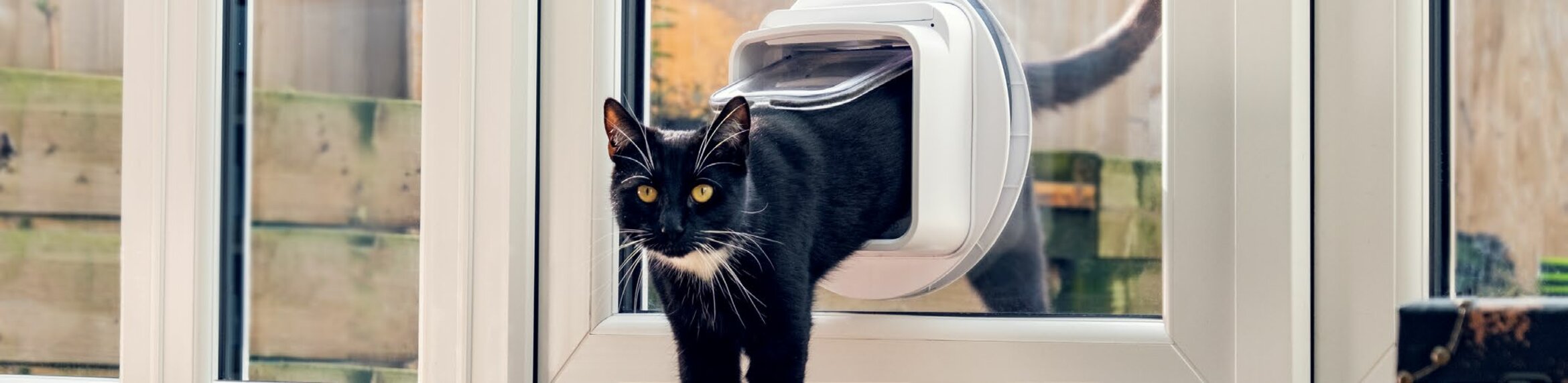
Your home is your cat’s world, so it is important they feel safe. Installing a microchip cat flap will stop any would-be intruder animals from coming indoors, making your cat feel much more secure. A microchip cat flap works by reading your cat's microchip number and unlocking to let them in. If a cat with a code that doesn’t match attempts to get in the microchip cat flap will remain locked.
As well as securing your cat flap, providing plenty of hiding spaces or perches in your home will also help to reduce stress levels. in my experience, cats feel more secure and less anxious when they are given the opportunity to display natural behaviours like hiding and climbing.
Create a routine your pet can rely on
By having a routine, your cat will know what to expect from their day. This means keeping mealtimes consistent and scheduling play at regular times. This can be especially helpful when other changes are occurring like a new family member or house move.
You should also make sure you have enough resources in the house so that your cat doesn’t encounter conflict with any other pets. There should be a litter tray per cat in your house, plus an extra one, and the same also applies to food and water bowls. This means your pet can access these items regularly throughout the day without fighting over them. Many cats also prefer their water source to be positioned away from food bowls, which can encourage more natural drinking behaviour and reduce tension around feeding areas.
You should also consider your cat and their routine when you have parties or visitors. Keeping them in a quiet area of the house where they can be left undisturbed is a good idea.
Increase the number of play sessions
Spending quality time with your pet will increase the number of positive experiences they have. Play allows cats to demonstrate hunting actions like stalking and pouncing, which gives both their brain and body a workout. I find that stimulating your cat in this way can help to reduce feelings of stress and anxiety, as well as help them bond with you.
Consider using pheromone diffusers and other calming products
There are a variety of over-the-counter products available that may help your pet to feel less anxious. Research shows that artificial pheromone diffusers or sprays may help some cats to feel calmer. Alternatively, oral supplements may be useful for others, although more clinical trials are needed on some of these products. Many of these often contain natural ingredients like L-theanine, casein, L-tryptophan, and B vitamins, which are said to have natural calming or neuroprotective effects.
Speak to your vet
If your cat still seems stressed despite your attempts to create a safe home environment, then you should speak to your vet. I recommend this as a starting point anyway to rule out underlying health issues, but your vet can also help you manage your pets stress longer term. They may be able to recommend prescription medications or refer you to a qualified pet behaviourist if you are struggling.
Key takeaways
It is important that your cat feels safe and secure, as ongoing stress can have some serious health consequences. Microchip cat flaps are an essential tool in keeping out intruder animals, but increased play sessions, a good routine, and calming products will also help your pet greatly.
If you’re concerned about your cat’s stress levels or behaviour, your veterinary team can help rule out medical causes and guide you on the most appropriate next steps